
It's time to re-think mobile coverage.
Wireless connectivity is invisible. You don't think about it until it fails, and then it's the only thing you can think about. An emergency in an underground car park. A warehouse robot that loses its connection and stops. An autonomous dozer that moves into the shadow of the high-wall.
Buildings have been designed for decades without connectivity in mind. When problems emerge, they're retrofitted awkwardly. The industry that's supposed to solve this is fragmented. Carriers focus on their networks. Installers focus on cabling. Equipment vendors focus on hardware. No one owns the outcome for the building owner.
Clients are left navigating between vendors who don't talk to each other, trying to piece together solutions from companies with different priorities and different timelines. The result is expensive, slow, and often disappointing.
We saw an opportunity to approach this differently.
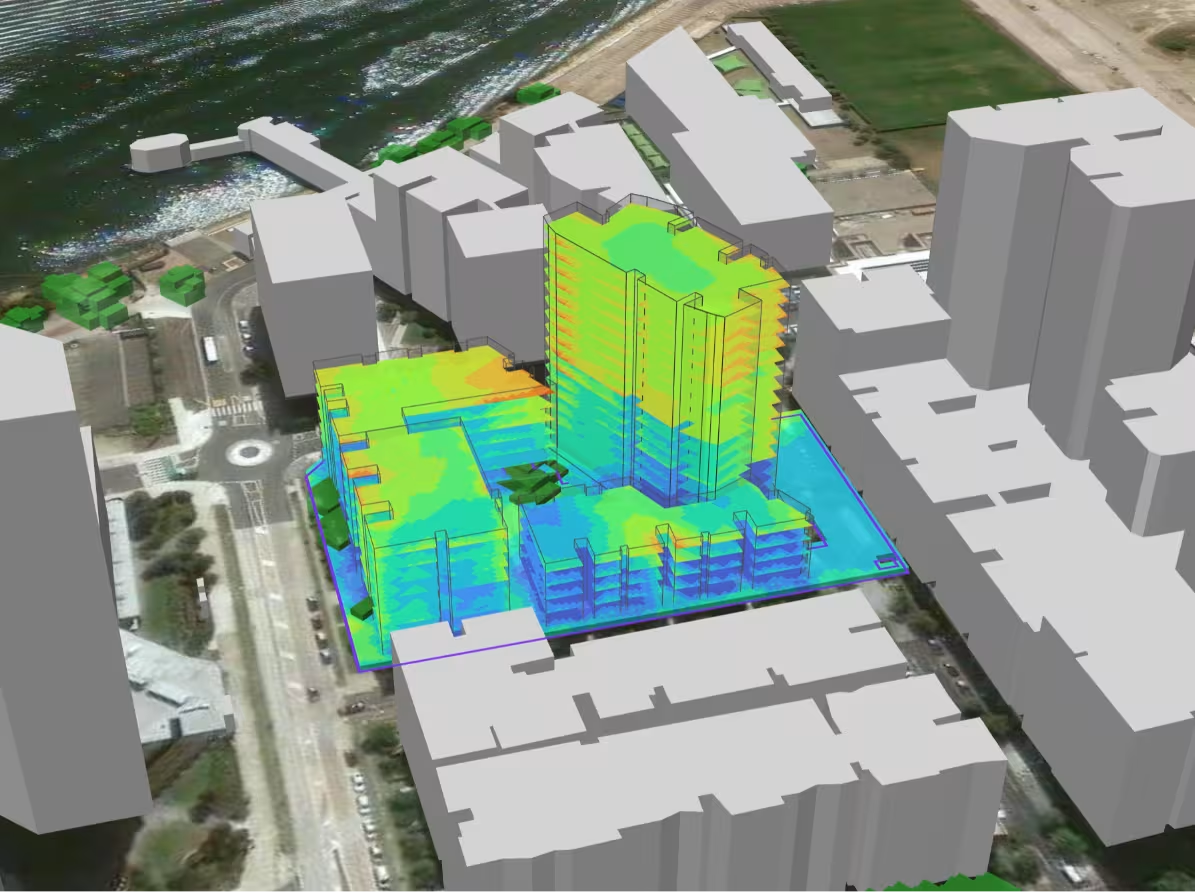
Technology is changing faster than ever.
The world is building machines that think and move like humans. Autonomous vehicles in warehouses. Robots in logistics centres. AI systems that coordinate operations across facilities. These machines depend on high-performance connectivity to access central models and data stores. They need reliable, predictable wireless - not "good enough" coverage that works most of the time.
Today, these systems can't see their connectivity environment. They can't reason about coverage, predict where signal will be weak, or adapt to changing conditions. They operate blind to one of their most critical dependencies.
This will change. Awareness of connectivity will become essential - not just having signal, but understanding it. Machines will need to query their environment: I need to remain in contact as I fly from A to B. Where are the risks? What happens if conditions change?
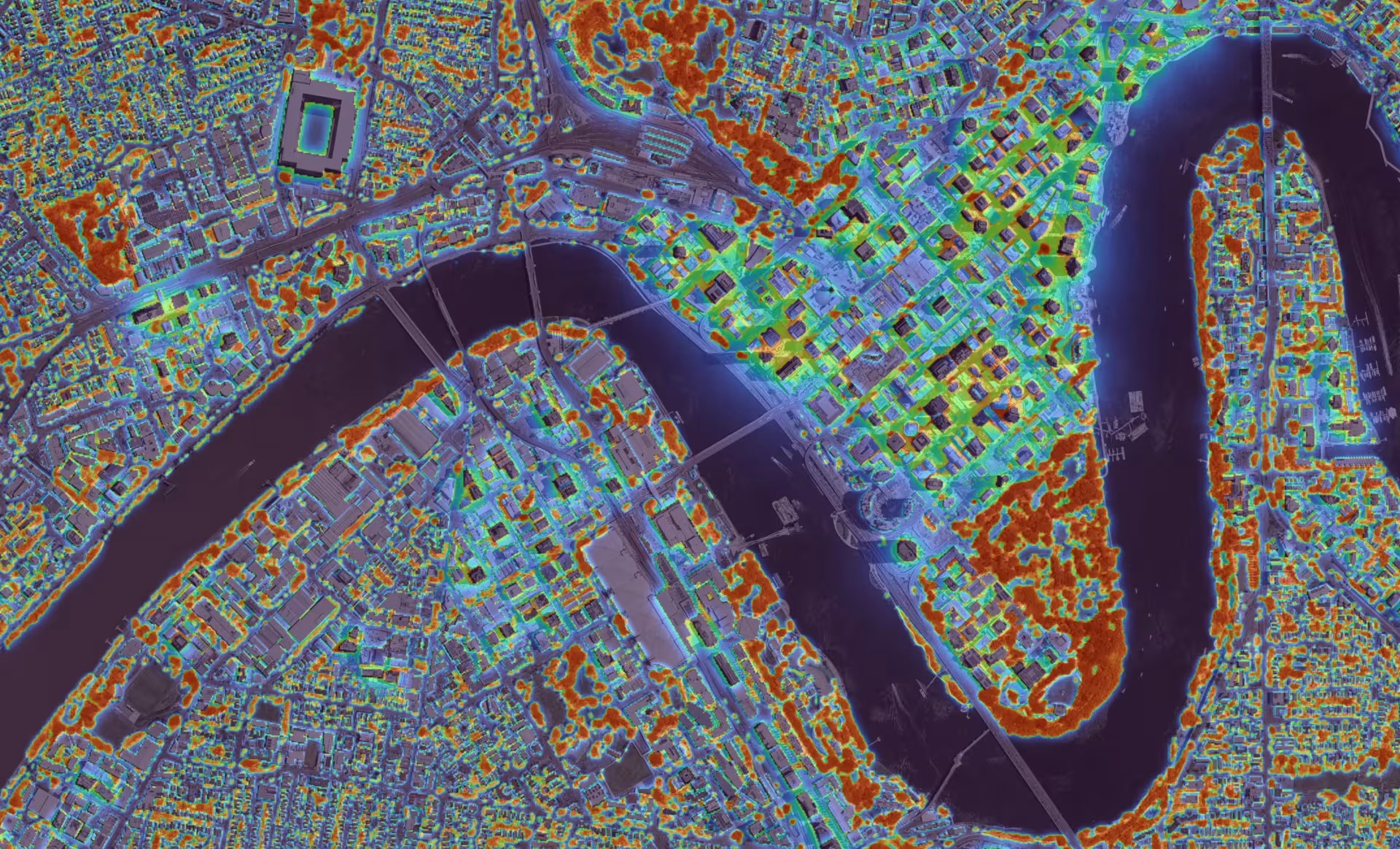
Axidra is building toward this future. We're creating the connectivity model that autonomous systems will need - a digital representation of the wireless environment that can be queried, analysed, and reasoned about.
But we're not waiting for that future to arrive. Most businesses today still battle basic coverage challenges. Dead zones in offices. Failed calls in car parks. Unreliable connections in warehouses. We solve those problems now, using the same platform and approach that will enable what comes next.
As our clients adopt new technologies - automation, robotics, AI-driven operations - we're already positioned as the partner that enables them. Not just connectivity infrastructure, but Connectivity Intelligence.
It's time to build our connected future.
Several technologies have converged to make this possible. Private 5G is democratising what was once carrier-only infrastructure. Digital twin and GPU technology has matured enough for real-time RF modelling. Buildings are becoming smarter, and they're demanding smarter connectivity to match.
The companies that build this capability now will shape the next decade of how buildings connect. We intend to be one of them.
Who we are.
We're a small team with global ambition. Australian-founded, working with installation partners across multiple countries. We're looking for creators and innovators who want to be part of building something that doesn't exist yet.
We're building the tools that will make connectivity visible, manageable, and intelligent. If that sounds like work worth doing, we'd like to hear from you.
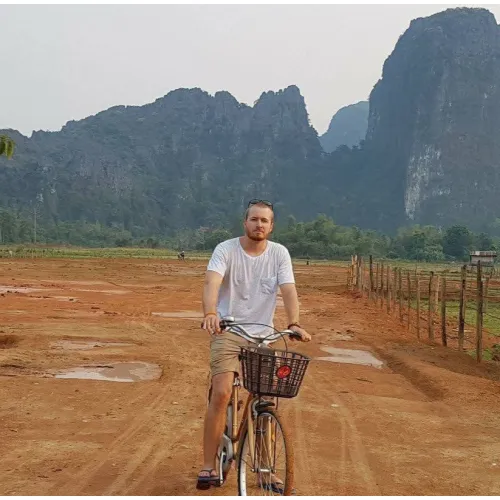
Doug Pukallus
Doug is part of Axidra's founding team, establishing the company in early 2025.
Combining a strong passion for Geographic Information Systems (GIS), software development, and wireless technologies, Doug has worked in the telecommunications industry since graduating university in 2012, and the IBC & DAS technologies sector since 2019.