
How we work on coverage.
The work begins from our proprietary platform Axidra Cloud. Every commercial building in Australia is in it, along with every transmitter in every mobile operator's deployed network - 4G and 5G, and anything else you might need to know about such as emergency services radio. Coverage is computed building by building, using ITU-approved propagation engineering of the same class the carriers use to plan their own deployments. The modelled coverage picture for any building you'd bring already exists in it.
From there, the engagement takes the shape the situation calls for. The work for a portfolio of buildings, for a single building, and for a building still on the drawings is described separately below.
Predict
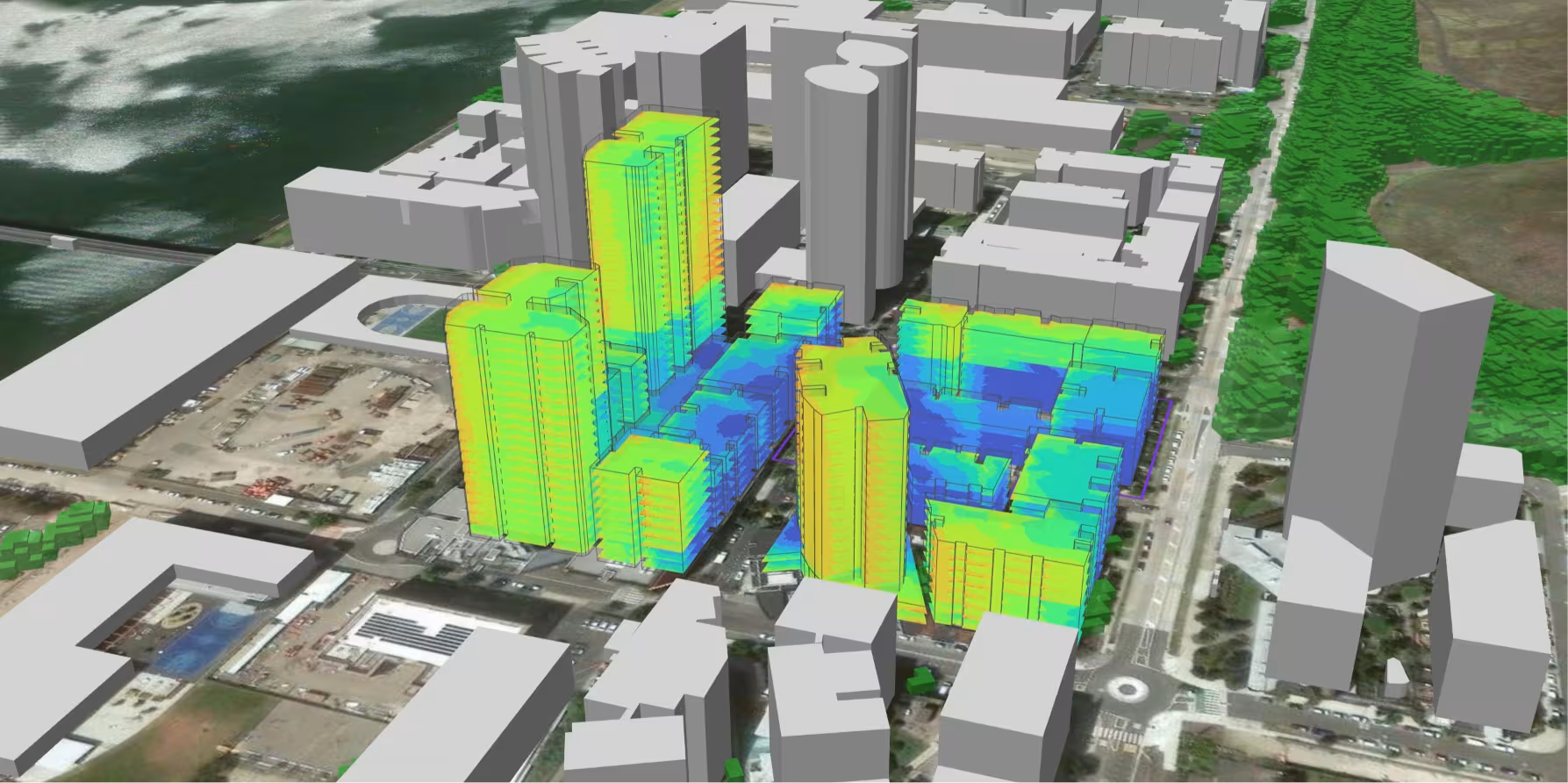
One building or one hundred. Our digital twin technology instantly analyses each building in 3D to determine the cause of poor coverage issues.
Claim your organisation to access detailed statistics on the entire portfolio, along with site-specific findings on how each building is performing.
Monitor
When your staff and customers rely on mobile coverage operationally, you need to know about it.
Our Monitor solution puts an advanced 4G-5G performance monitoring device into your building to provide live tracking and a continuous historical record of signal strength, data speed, call quality, and more.
Every mobile operator and every band concurrently.
Build
When a building's coverage needs more than measurement, we deliver the solution that fixes it.
The building is modelled in 3D from its floor plans, a system designed using state-of-the-art raytracing physics, and installed by qualified contractors.
The installed system reports back into your dashboard, so what's delivered is what you continue to see.
For a portfolio of buildings.
For organisations operating many buildings, mobile coverage at any of them is largely invisible, known where it's broken loudly enough to surface as a complaint, unknown everywhere else. Predict is the entry point. Roll it up by region, by site type, by carrier; the patterns and the outliers are in the same view. They line up with the complaints already in your inbox, and surface a handful you hadn't heard about.
From there, the work scales to where it's most useful. At sites where coverage is non-negotiable - payments, ordering, scanners, customer experience - Monitor adds permanent sensors that watch every network on every band continuously, with alerts into the operations stack you already run. At sites where the modelled picture and the measured ground truth agree coverage needs to be fixed, Build is the engineering work that designs, installs and commissions the in-building system, and the installed system reports its telemetry back into the same view.
Most portfolio engagements expand outward from the modelled picture as the operational case for each next step is made. Engineering work happens once the problem is visible, not before.
For a single building.
For a building where coverage has never been good enough, such as a factory floor, a warehouse, a clinic, a regional office, the work is Build: a defined-scope engineering engagement that designs, installs and commissions an in-building cellular system.
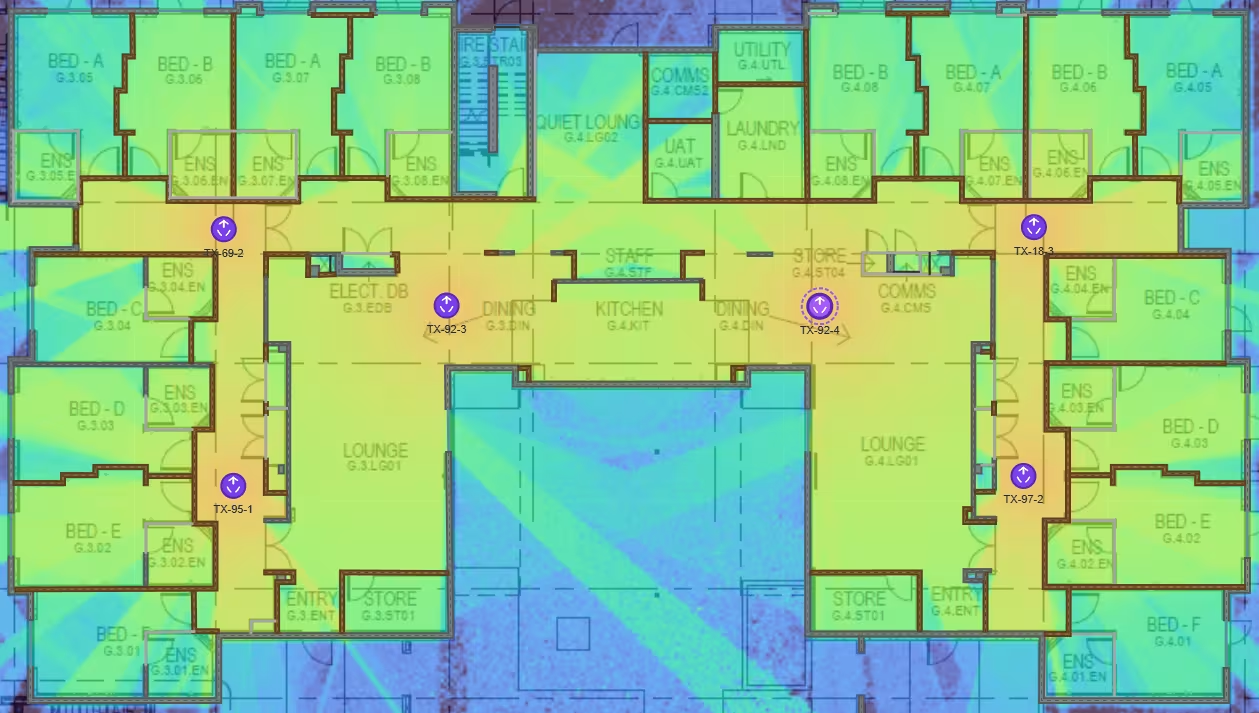
The IBC team models your building in 3D from its floor plans, places the coverage nodes that make up the proposed system, and simulates the result using our advanced physics engine. The predicted coverage map is reviewable before any equipment is ordered. The install follows the design, delivered by Axidra's contractor network and scheduled around your operations. The commissioned system reports its telemetry back into Axidra Cloud - what's delivered is what you continue to see.
Engagement starts with submitting the building: floor plans, access constraints, operational requirements. The engineering team comes back with a design, a quote and a delivery plan. The scope is defined; the deliverable is a working in-building cellular system; the engagement runs to commissioning.
You can use our Building Analyser to get a quick estimate on costs for your building.
For buildings still on the drawings.
For new buildings, the right time to engineer in-building coverage is during design - before the spec for electrical and comms is locked, before fit-out begins. Retrofit costs are a multiple of engineering it in alongside the rest of the building's services.
Our digital twin works the same way for buildings that don't exist yet. Use our Building Analyser to place a proposed building at any Australian address, or modify an existing one, and the modelled coverage picture lights up just as it does for built sites. Property and development teams use it to evaluate candidate sites on predicted connectivity before signing a lease, or to flag pre-build risk while there's still time to specify a remediation in.
Where the prediction shows in-building coverage will be inadequate, Build engages at design stage. Floor plans become a 3D model the same way they would for an existing building; the proposed in-building system is engineered into the building's design alongside the rest of its services; engineering deliverables are produced to fit the project's documentation. Installation runs on the project's timeline.
Specific solutions for your sector.
The fundamentals of in-building coverage are the same across industries, but the buildings, operational requirements, and constraints differ substantially. Read more about what we've learned in each.



What it looks like.
We look after all of your sites in one place, big and small. While all architectures share our network-approved RF design standards, management, monitoring, and support services, they differ significantly in reach, capacity, and cost depending on the size and occupancy of your building.
Fix a single black spot in days. Pre-approved hardware that's connect-and-go.
- Basement Car Parks
- Plant & Comms Rooms
- Reception Areas
Typical Budget: $10,000
Node-based architecture for whole-building, multi-storey, and/or multi-carrier coverage. Deployed in weeks.
- Aged Care & Medical Centres
- Residential Apartments & Hotels
- Factories & Warehouses
Typical Budget: $100,000
Carrier-integrated, MCF-standard, gigabit capacity for high-density towers & campuses. 6-18 month timelines.
- Shopping Centres
- Airports
- Major Hospitals
Typical Budget: $1,000,000
Start where you are.
Bring us a building, an organisation, or a problem you're trying to solve. We'll come back with what's needed.